Progress Photos Can Lie as Much as the Mirror Does
People who would never trust a single weigh-in will completely trust a single photo. The scale gets warned about every week. The photo gets treated like court evidence. That trust is misplaced.
 By pkang7 min read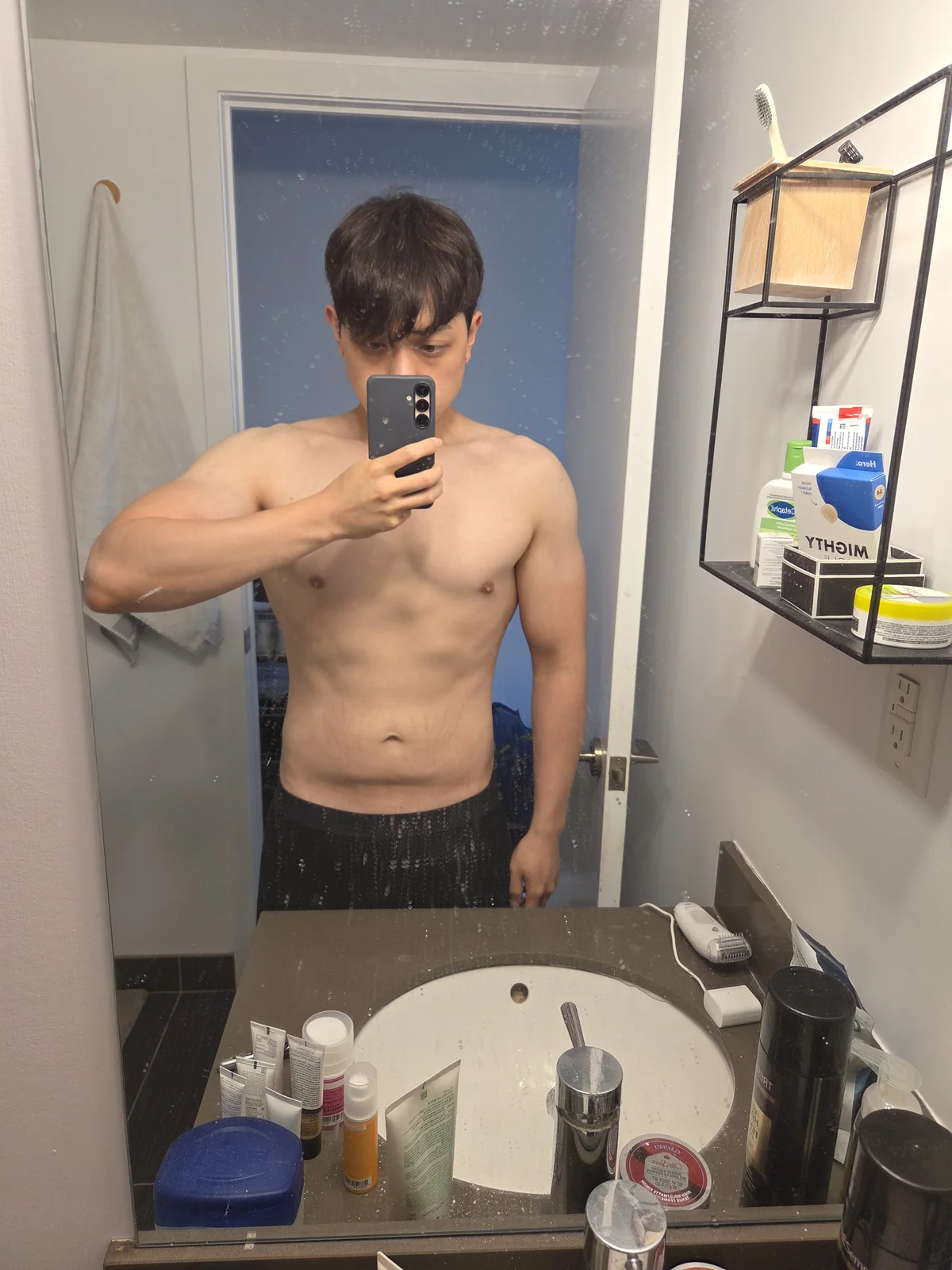
Why progress photos don't show progress half the time has nothing to do with the body. It's lighting, posture, and last night's dinner. People who would never trust a single weigh-in will completely trust a single photo.
The scale gets warned about every week. "It is just water. It is just sodium. It is just the time of day."
The photo gets treated like court evidence.
That trust is misplaced. Photos lie at least as much as the mirror does. They just lie more convincingly because they look final.
Why don't my progress photos show progress?
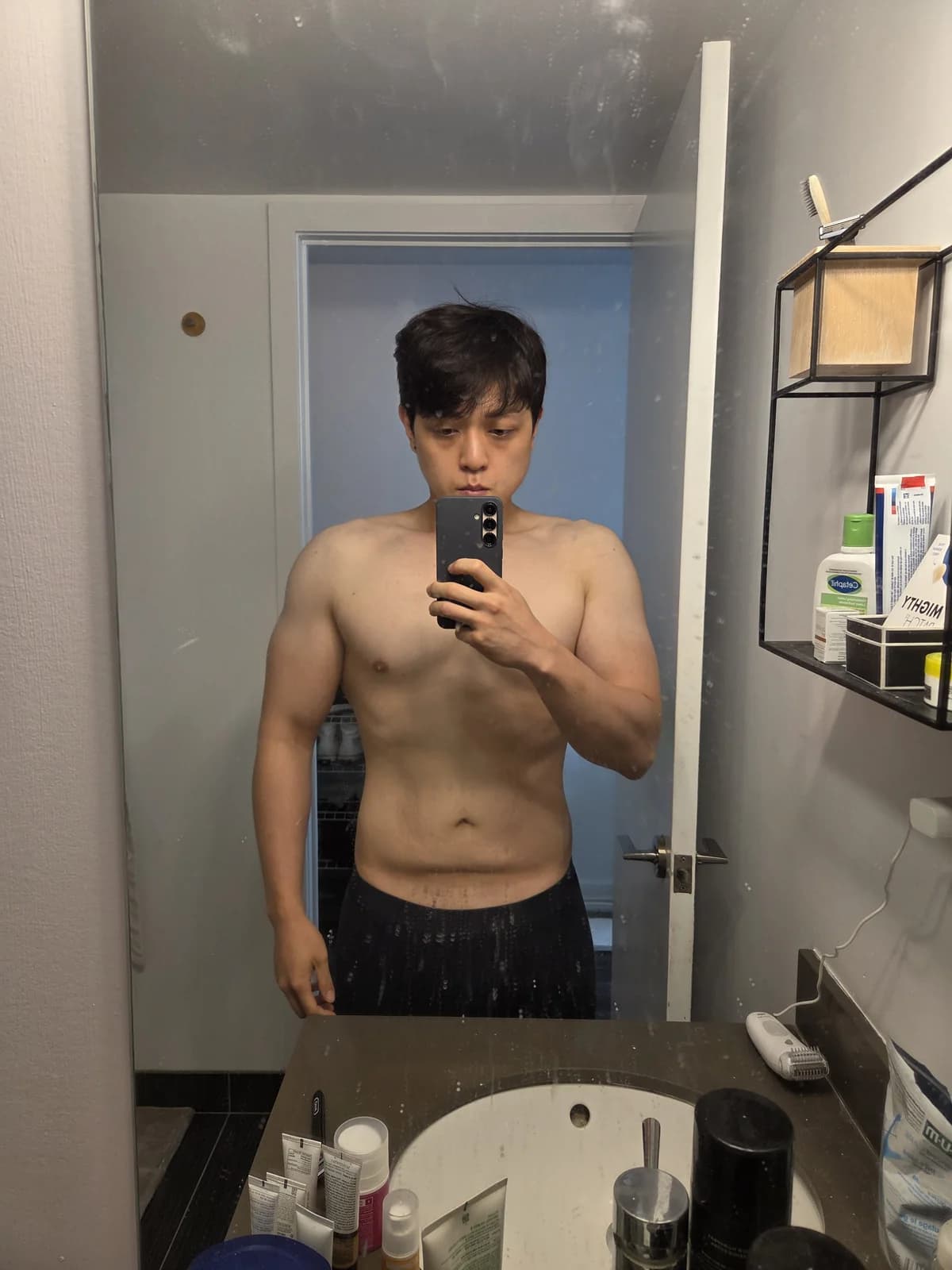
Because the photo changed, not the body. Lighting, posture, time of day, last night's food, sleep, and camera angle can each fake an entire month of progress in either direction. The same body in two photos can give two verdicts. Treat any single photo as a sample, not a sentence.
What Makes a Photo Look Like a Different Body
The body in the photo did not change overnight.
The photo did.
Lighting. Overhead light flattens you and erases shadow. A side light from a window two meters away carves out every line of your torso and makes you look two weeks leaner. The same body. Two photos. Two verdicts.
Posture. Standing relaxed adds 1 to 2 cm to your waist measurement and a soft layer to the front of your stomach. Standing braced — shoulders back, ribs down, breath out — removes both. Not flexing. Just posture. Most "before" photos are slumped. Most "after" photos are braced.
Time of day. A morning fasted photo looks markedly different from an evening photo after dinner and a litre of water. The midsection alone can shift visibly across one day.
Last night's food. High sodium, high carb, or alcohol — any one of them can hold 1 to 2 kg of water in the next 18 hours. That water sits exactly where you do not want it for the photo.
Sleep. Bad sleep puffs the face and softens the jaw. Good sleep tightens both. The body looks more "lean" the morning after seven hours than after four, even at the same weight.
Camera angle. A camera held just below eye level slims the torso and lengthens the legs. A camera held above shoulder level does the opposite. A few centimetres of height on the lens can fake a body recomposition.
Same body. Different photo. Different verdict.
Why this Lie is More Dangerous than the Mirror Lie
When the mirror makes you doubt your progress, it usually only ruins one morning.
When the photo makes you doubt your progress, you can stare at it for weeks. You can save it to a folder. You can compare it to the photo from last month and conclude, with what feels like proof, that nothing is happening.
That conclusion is harder to argue with because the photo looks like data. It looks objective. It looks like the truth.
It is not. It is one frame from one moment of one body that varies a lot day to day.
Single photos are not proof. They are a sample of one.
What an Honest Progress Photo Actually Requires
If you want a photo to mean something, you have to remove most of what makes photos lie.
Same room. Same time of day, ideally morning, fasted. Same camera distance and angle, marked with tape on the floor. Same light source, ideally natural light from one consistent direction, not overhead, not phone flash. Same posture instructions, same number of breaths exhaled, same stance.
That setup is annoying. Most people skip it. Most people then blame their body when their photos do not show progress, when the actual problem is that no two of their photos were taken under the same conditions.
You do not have to be a studio. You have to be a system.
Compare in Months, not Weeks
Even with a controlled setup, week-to-week photos are mostly noise.
Body composition does not move fast enough for a one-week comparison to mean much. Most of what changes between two weekly photos is water, glycogen, and posture, not fat or muscle.
The honest comparison window is four weeks minimum. Often eight.
If you are comparing your week-three photo to your week-four photo and feeling defeated, you are using the wrong instrument. That is not the photo's job. That is what the scale weekly average and the tape measure are for.
The photo is a quarterly proof, not a weekly progress check.
What to do with the Photo on a Bad Photo Day
Bad photo days are not bad body days.
The body the morning after a high-sodium, low-sleep, low-fibre evening looks like a setback. It is not. The food is in transit. The water is held. The face is puffier. None of that is fat.
Wait three days. Take the photo again under your standard conditions. The "setback" almost always disappears.
If you panic-restrict on the bad-photo day, you teach your body that bad days are punished. That sets up a worse pattern than the puff itself.
Why i Keep three Reference Photos, not One
A single before photo is too much weight on a single moment.
I keep three baseline photos, taken across one week under matched conditions. The middle one is the truth. The other two are the noise around it.
Then I do the same for every comparison point. Three photos at month one. Three at month three. Three at month six.
When I compare, I compare the middle photo to the middle photo. The noise cancels. What is left is signal.
If the middle photos look the same and the tape measure says nothing changed, then nothing changed. If the middle photos look different and the tape agrees, the change is real.
The Line Worth Keeping
A photo is one moment of one body under one set of conditions.
Treat it like a sample, not a sentence.
The body is the constant. The photo is the variable.
If the photo is the only thing that changed, the body did not lose anything. It was not winning, either, when an earlier photo made you feel briefly better than the truth deserved.
The mirror lies fast. The photo lies slowly and looks more like proof while it does it.
Frequently Asked Questions
What makes the same body look different in two photos?+
Lighting direction, posture, time of day, last night's food, sleep quality, and camera height. Lifting the camera a few centimeters slims the torso. Standing braced removes 1 to 2 cm at the waist. None of those is fat loss. All of them are the photo, not the body.
Why is the photo lie more dangerous than the mirror lie?+
Because you can stare at a photo for weeks. You can save it to a folder. You can compare it to last month's photo and conclude, with what feels like proof, that nothing is happening. The mirror only ruins one morning. The photo can ruin the program.
What does an honest progress-photo setup look like?+
Same room. Same time of day, ideally morning, fasted. Same camera distance and angle, marked on the floor. Same light source. Same posture and stance. Most people skip this and then blame their body when nothing shows. The setup, not the body, was the problem.
How often should I compare progress photos?+
Four weeks minimum. Often eight. Body composition does not move fast enough for a one-week comparison to mean much. Most of what changes between weekly photos is water, glycogen, and posture, not fat or muscle. The photo is a quarterly proof, not a weekly check.
What do I do on a bad-photo day?+
Wait three days. Take the photo again under your standard conditions. The setback almost always disappears. Bad photo days are not bad body days. Panic-restricting on a bad photo day teaches your body that bad days get punished, which sets up a worse pattern than the puff itself.
Next step
A photo is a sample, not a sentence.
If you want a photo to mean something, you have to remove most of what makes photos lie: same room, same light, same posture, same time. Compare in months, not weeks.
Try the free body scan