How to Go on a Mirror Diet When the Real Diet Is Getting Loud
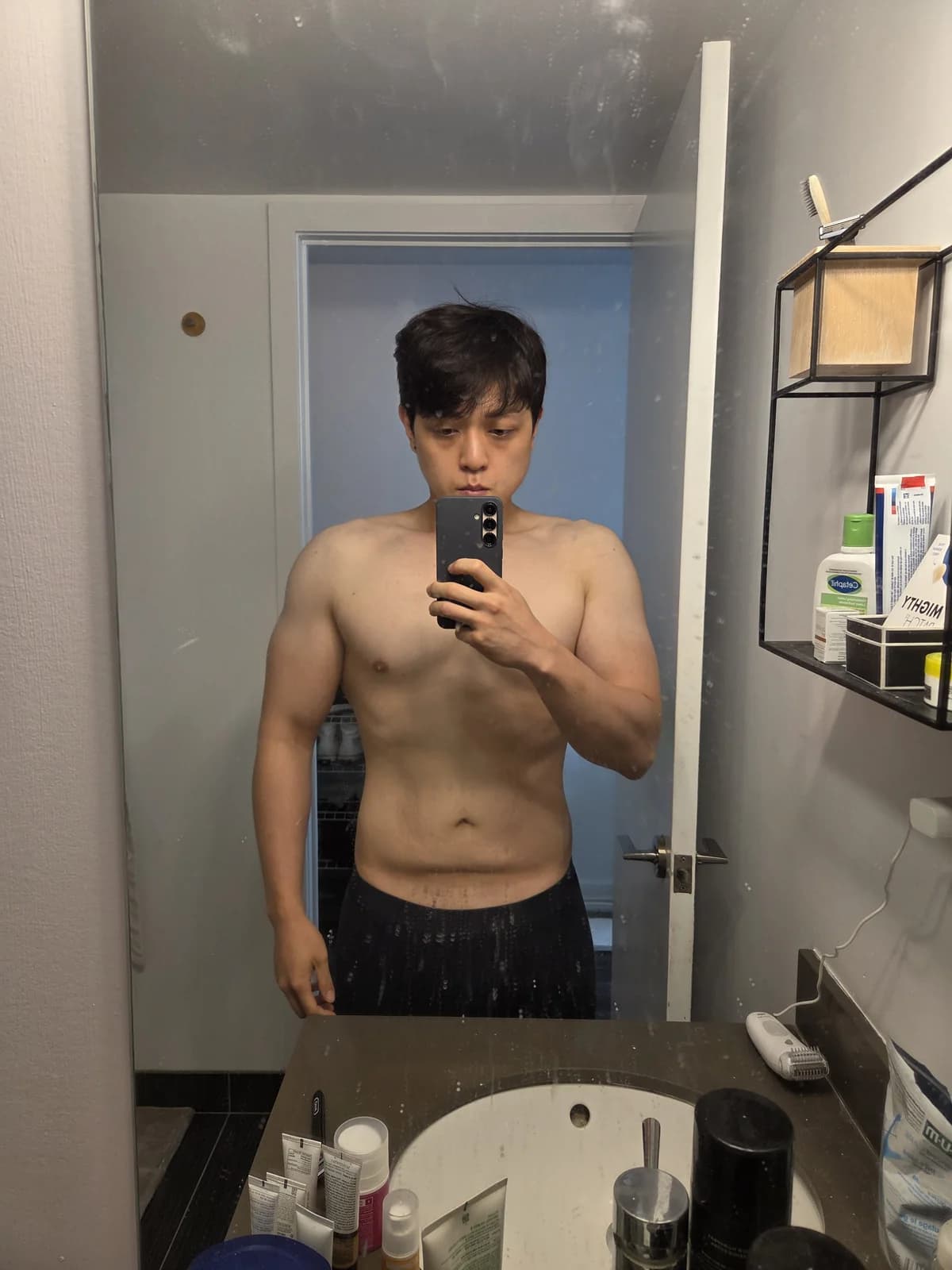
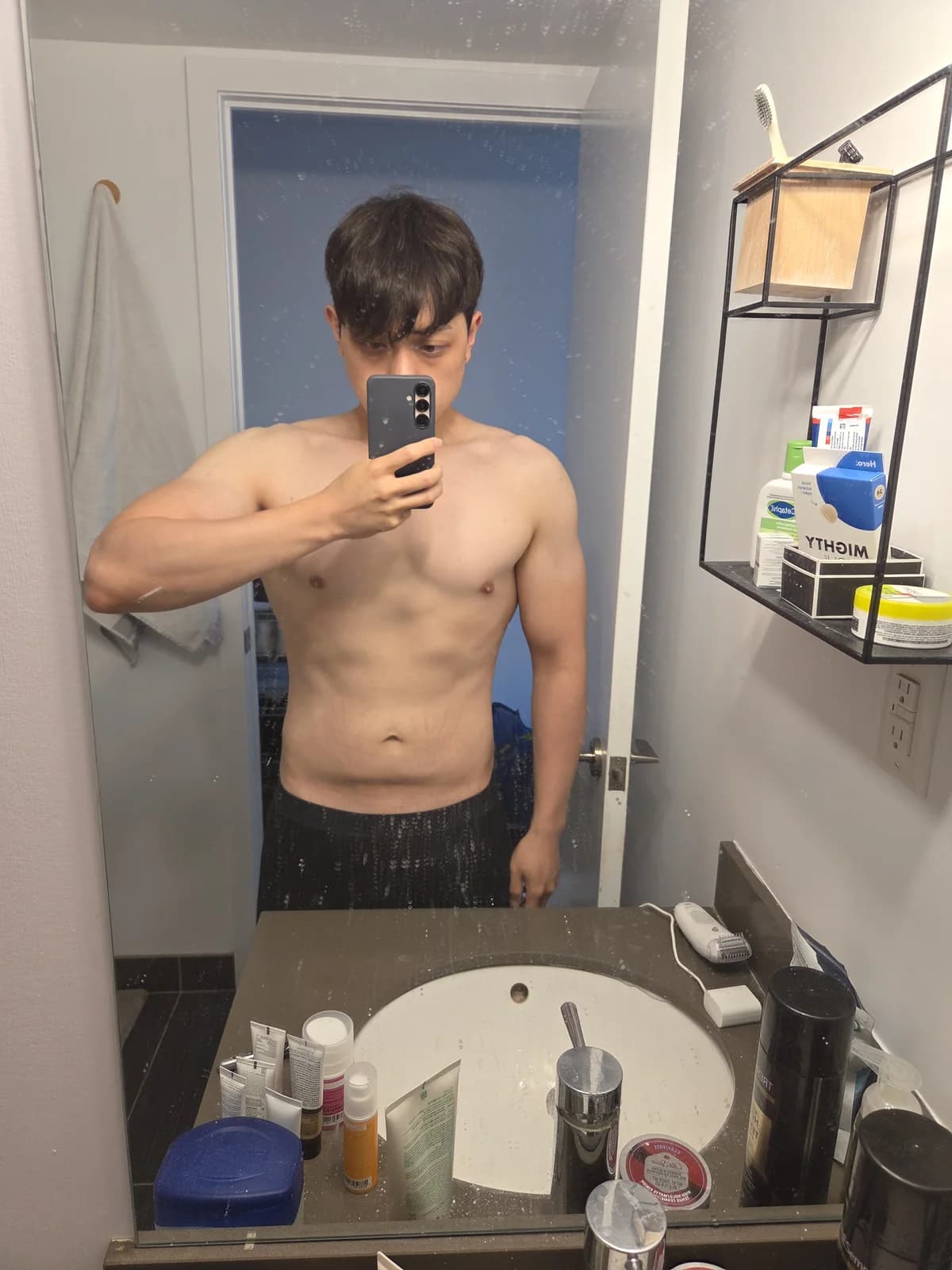
There is a phase in most cuts where the diet is working and the mirror is getting louder. The clothes are looser. The trend is down. The reflection at 7 a.m. before coffee is having a different conversation entirely.
 By pkang8 min read
Here's how to stop mirror checking on a diet that's actually working: look less, look better, and look in fewer states. There is a phase in most cuts where the diet is working and the mirror is getting louder.
The clothes are looser. The trend is down. The numbers say go. The reflection at 7 a.m. before coffee is having a different conversation entirely.
This is not unusual. It is the moment most people start checking the mirror more, hoping for evidence that catches up to the data. The hope is rational. The behavior is the wrong one. More checking is what makes the mirror louder, not what calms it.
The fix, in a phase like this, is to go on a mirror diet. Reduce the number of checks. Improve the conditions of the ones you do. Lengthen the windows between them.
How do I stop mirror checking on a diet?
Go on a mirror diet. Look less, look better, look in fewer states. Cut casual checks down to two a day under structured conditions — same time, same lighting, same posture, ideally morning and fasted. Skip the worst lighting. Skip the bathroom mirror at midnight. Two structured checks beat eight opportunistic ones.
What a Mirror Diet Actually Looks Like
Three rules.
Look less. Look better. Look in fewer states.
Look less means cutting the daily count of mirror moments. If you currently check the mirror six to eight times a day — passing it, dressing in front of it, brushing teeth, lighting changes, etc. — the diet target is two. One in the morning at the same time, after the same routine. One at the end of the day, briefly. Everything else gets averted, walked past, ignored.
Look better means the two checks per day happen under controlled conditions. Same time of day. Same lighting. Same fasted state in the morning. Same posture. The check is structured, not opportunistic.
Look in fewer states means avoiding the worst lighting and worst times. Late evening with overhead light. Bathroom at midnight. Dressing room with three angles of fluorescent. Those are not honest mirrors. They are theatre. A mirror diet skips them.
Look less. Look better. Look in fewer states.
Why this Works when Nothing Else Does
The mirror is not an instrument. It is a feedback loop.
Each check is information that affects the next check. If a morning check feels bad, the next check that day starts loaded with a bad-mood lens. The third check escalates further. By the seventh check of the day, the mirror is no longer giving you information about your body. It is giving you information about the trajectory of the day's mood.
Cutting the count breaks the loop. The mirror becomes more like a measurement than a conversation. Two readings under the same conditions, on the same instrument, give you a clean signal. Eight readings under varying conditions give you noise that feels like signal.
The mirror does not get more honest because you confront it more. It gets less useful.
Why the Loud Phase is Also the Most Fragile Phase
The loud phase usually arrives somewhere between week six and week twelve of a meaningful cut.
By that point, the body has changed enough that the mirror should be cooperating. It often is not, for two reasons.
The reason that gets discussed is that the mirror is calibrated against the old body image, which lags the actual body by weeks. So you see a transition state through the lens of someone expecting an end state.
The reason that does not get discussed enough is that the loud phase is also when the diet is starting to demand more from you. You are tired. You are hungry. Sleep may be slipping. Mood is thinner. The mirror is absorbing all of that and presenting it as evidence about the body.
A mirror check at week ten of a cut is not really about week ten of the body. It is about how the past three days of the cut have gone, run through your reflection. Cutting the checks reduces the surface area for that bleed.
What to do with Photos in the Same Phase
Photos can be on the same diet as the mirror, with similar rules.
Take one per week. Same conditions. Same posture. Save it without analyzing it. Put it in a folder. Do not compare it to last week's photo on the day you take it.
Compare every four weeks. The four-week comparison is informative. The week-to-week comparison is mostly noise.
If a four-week comparison shows progress, trust it. If it shows nothing, the trend is happening in places the photo does not capture — usually waist, sometimes face. Use the tape measure for those.
The photo, like the mirror, gets less useful when it is consulted constantly.
What to do with the Scale in the Same Phase
The scale, in the loud mirror phase, often becomes a counter-instrument.
If the mirror is loud and the scale is down, you can lean on the scale's quiet honesty. The number is moving. The body is moving. The mirror is not the lead instrument right now.
If the mirror is loud and the scale is also flat, the temptation is to read the flat scale as confirmation that the mirror is right. It is not. Flat scales in the loud phase are usually water from the cumulative stress of dieting through the week. Two-week or four-week scale averages catch the actual signal. Daily readings will lie alongside the mirror.
The longer the comparison window, the cleaner the signal across all instruments — scale, mirror, photo. Shorter windows compress noise into something that looks like a verdict.
What i Did During my Own Loud Phase
I covered a mirror.
The full-length one in the bedroom. Not because I was running from my body. Because the full-length one was the loudest one in the apartment, and most of the casual checks were on it as I passed it ten times a day.
I left a smaller mirror up in the bathroom for the morning check. That was the one structured check.
For about three weeks, I had only the bathroom mirror.
The trend kept going. The clothes kept loosening. The waist measurement kept dropping. None of those needed the bedroom mirror. The bedroom mirror had been adding nothing except seven extra checks a day, each one slightly more loaded than the last.
When I uncovered it three weeks later, the body was further along, and the relationship to the bedroom mirror was different. The body had had time to change without my interference. The mirror had had time to lose its accumulated mood.
That mirror diet did more for body image than any pep talk ever did.
When to Come off the Mirror Diet
When the loud phase ends.
You will know. The morning check will start agreeing with the trend. The evening check will stop being charged. A passing glance will go back to being neutral.
At that point, the structure can loosen. You can hold the rules — same time, same conditions, longer comparison windows — without needing the strict count limit. The diet ends when the loop breaks.
If the loud phase comes back, the diet comes back. It is not a permanent setting.
Why this is not Avoidance
There is a version of this argument that calls a mirror diet "avoiding your body."
The framing is wrong. A mirror diet is not avoiding the body. It is selecting which instruments are giving you useful data right now.
The mirror is one of several body-feedback instruments. In the loud phase, it is the noisiest one. Selecting against it for a few weeks does not deny the body; it lets the cleaner instruments — clothes, tape measure, weekly scale average, four-week photo — do their work.
When the noisier instrument calms down, it gets re-included. Until then, it sits out.
Treating the body well sometimes means turning down the loudest instrument in the room.
The Line Worth Keeping
Look less. Look better. Look in fewer states.
The mirror does not need to be the lead instrument every day. There are weeks where it is wrong about almost everything, and the kindest thing you can do for the program — and for yourself — is to consult it fewer times under cleaner conditions.
The body is moving. The mirror does not have to be the one that tells you.
Frequently Asked Questions
Why does more checking make the mirror louder?+
Because each check is information that affects the next check. A bad-mood morning loads the next reading. By the seventh check of the day, the mirror is reporting on the trajectory of your mood, not your body. Cutting the count breaks that loop.
When is the loud mirror phase usually worst?+
Somewhere between week six and week twelve of a meaningful cut. By then the body has changed enough that the mirror should be cooperating, but you are also tired, hungry, sleep-thinned, and mood-thinner. The mirror reads all of that and presents it as evidence about the body.
Should I cover my mirrors during this phase?+
If a specific mirror is loudest — the full-length one you walk past ten times a day — yes. Cover it for two or three weeks. Keep one structured mirror up for the morning check. Fewer casual checks does more for body image than any pep talk.
Isn't this just avoiding my body?+
No. A mirror diet is not avoiding the body. It is selecting the instruments giving you useful data this week. The mirror is the noisiest one in the loud phase. Clothes, tape measurements, weekly weight averages, and four-week photos do the work while the mirror calms down.
When can I come off the mirror diet?+
When the loud phase ends. The morning check starts agreeing with the trend. The evening check stops being charged. A passing glance goes back to neutral. The structure can loosen then. If the loud phase comes back, the diet comes back. It is not a permanent setting.
Next step
Cut the count. Improve the conditions.
The mirror does not get more honest because you confront it more. It gets less useful. Two structured checks per day under matched conditions are better data than eight opportunistic ones.
Try the free body scan