 Devenira
Loading…

Author
Fitness and diet writer. Lost 50 kg over five years and later turned that transformation into a professional modelling career.
I write about appetite, body image, and the slow work of learning how to read the body without panic. Most of my writing lives on Medium as @pkang. The fuller archive — including research notes and the founder story behind Devenira — lives here.
Experience
5 years of documented weight-loss work from 128 kg to 78 kg, plus 2 years of maintenance. Every piece here is first-person from that arc.
Expertise
Body composition, appetite regulation, binge-recovery patterns, maintenance psychology, scale-reading literacy, training-volume and hunger interaction.
Not a doctor
This is lived experience and observational writing, not medical advice. For clinical questions — thyroid, metabolic disease, ED history — see a physician, not a blog.

Extra sets feel productive long before they prove useful. When recovery is already thin, more volume raises the bill faster than the body can pay it.
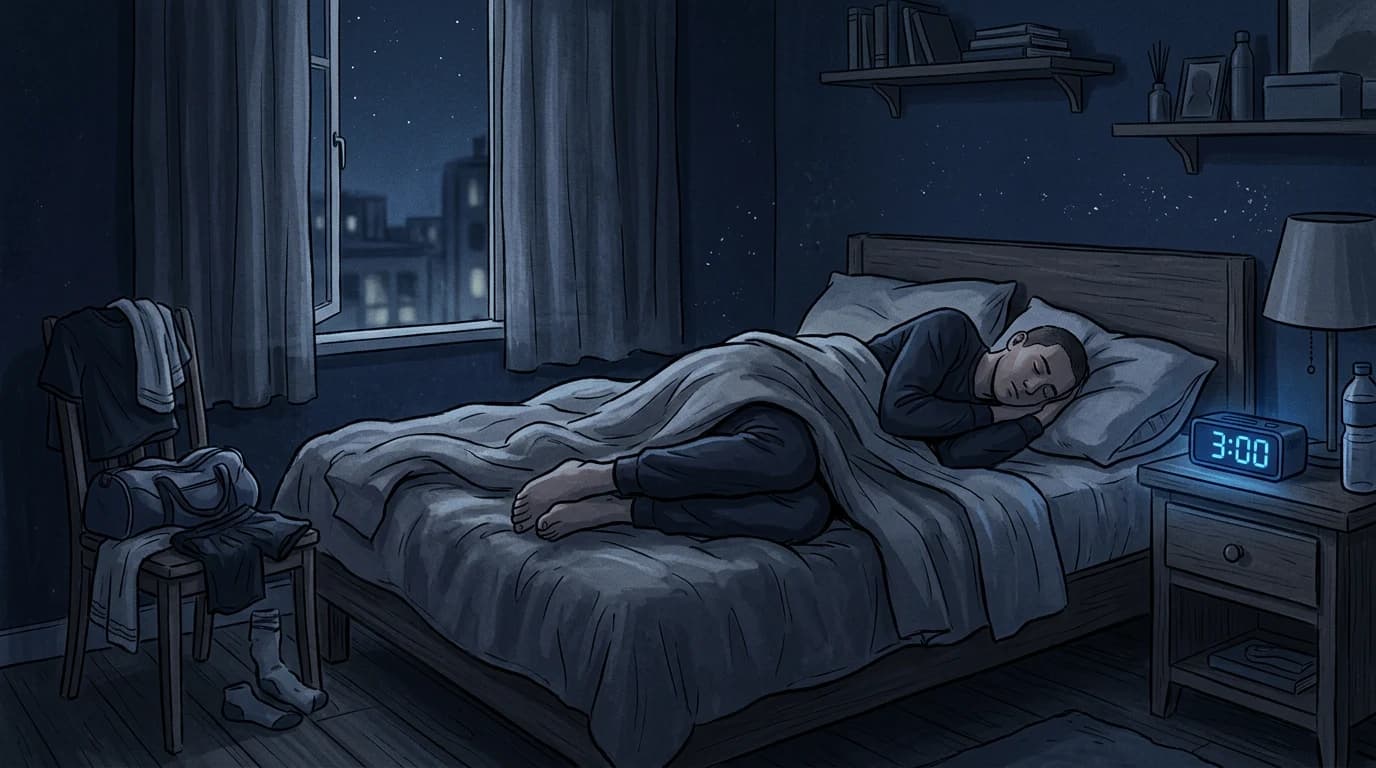
A short night can make ordinary food feel unusually persuasive before the day even properly starts. The appetite shift is often recovery showing up in disguise.

A higher Monday reading feels accusatory because it arrives right after the least structured part of the week. It is usually water, food volume, sodium, and timing before it is fat.

Tracking drift happens when the log still looks tidy but the real routine has started editing the edges. That small gap is enough to flatten progress.

A quiet middle week can feel like proof the plan stopped working. Usually the plan is still working. The emotional reward just got quieter than the panic.

When does a diet become a lifestyle? Quietly. You usually notice weeks after it has already happened. There is a quiet moment when the program stops being a project and starts being your life. The shift is not announced. It is noticed weeks later, by accident.

Why am I so hungry after lifting weights, even on weeks the scale didn't move? Hunger reads training volume, not body weight. Appetite is not a function of how much you weigh. It is a function of how much you trained, how you slept, and what your body is rebuilding. The scale is not what your hunger is reading.

One bad meal is not a slip. The slip is a behavior pattern that follows. A practical Q&A on the difference, with the early signals to watch for.

Five months into maintenance, my appetite came back. Not as failure. As a normal part of the body finishing the work the cut started. Here is what that week actually looked like.

Aggressive sodium restriction creates a fast scale drop that flatters bad systems. The water comes back, the food gets joyless, and the diet gets harder to hold.

Daily weigh-ins are sold as discipline. They are often the trap that wrecks the program. The fix is not less weighing — it is reading the right window.

Why adding cardio to a cut can backfire is rarely about the cardio. It's usually about what the cardio costs everywhere else. Cardio looks like the obvious add when fat loss slows. It often makes things worse, not better. The reasons are physiological, behavioral, and almost never about the cardio itself.

A practical Q&A on meal prep. When the Sunday containers help, when they hurt, and what to do if the prep itself becomes the problem.

When the diet is going well but the mirror is getting loud, the answer is sometimes a mirror diet. Fewer checks, on cleaner conditions, with longer windows between them.

One bad weekend taught me more than six clean weeks did. The damage was small. The pattern it exposed was the whole problem.

The mirror lies fast. The scale is noisy. The clothes do not negotiate. A founder note on why the most honest body composition tracker is hanging in your closet.

Life after 50kg weight loss is quieter than the highlight reel sells it. The dramatic part ends; the body just is. Four months past the last update. The numbers moved less. The relationship moved more. A founder check-in on the phase where the body finally goes quiet.

People talk about plateaus as if the body has stopped responding. Most of the time, the body has not stopped responding. The tracking has stopped being honest.

A practical Q&A on the night-hunger spike. Why a clean day can end with a 9 p.m. raid on the kitchen, and what the actual signal is asking for.

The first month of maintenance is the part nobody warned me about. The plate gets bigger, the structure stays, and the head expects a finish line that never arrives.

The real diet program is not the milestone post. It is the boring Wednesday. A founder note on the small wins that keep a long cut alive between visible checkpoints.

The same number on the scale rarely means the same body across decades. Composition shifts, sleep shifts, recovery shifts, and the meaning of the number changes with them.

Most diet cravings are not about the food. They are about a memory of being told no. A Q&A on telling the food from the deprivation, with founder notes from a long restrictive history.

People treat the progress photo as ground truth. It is not. Lighting, posture, time of day, and last night's dinner can fake an entire month of progress in either direction.
The slow corrosion between checkpoints is rarely about the body. It is about the moment you stop trusting your own evidence. A founder note on what happens in the gap.

Your strength improves before your shape does. The first six weeks of lifting are mostly neural. This is what that looks like from the inside.

Training under a deficit is not the same workout at a different weight. Your perception of difficulty is mostly correct, and there is a simple reason.

Protein is important on a diet for specific reasons. Here is how much you actually need, and where most protein advice overshoots.

Most late-afternoon and evening hunger is not hunger. It is signal mismatch. A practical Q&A on how to read yourself.

Most people who hold weight off for years share a few quiet traits. None of them are what motivational content says.

A practical Q&A on how to eat at dinners, parties, and events without overcompensating before or after. Most of the damage is not at the event.

The rebound is not lack of discipline. It is a predictable response to how most people diet. Here is what actually happens.

You can lose weight and not get leaner. You can get leaner and not lose weight. The scale is telling you one thing, the mirror is telling you another.

Week one numbers are not the diet working. They are water, glycogen, and novelty. The honest reading starts around week three.

Other people see your body change before you do. The delay is not vanity. It is how self-perception actually works.

One binge does not wreck a diet. The week after a binge wrecks a diet. Here is how to contain it.

Protein gets all the attention. The food that quietly decides whether your diet feels tolerable is usually vegetables.

Three bad nights is enough to undo a week of careful eating. Sleep is not a recovery topic. It is a dieting topic.

Morning and evening weight are not the same reading. Treating them as one number is how people misread their week.

Questions and honest answers about what a set point actually is, how to know you are at one, and what it means if you want to go lower.

The friend who never diets and never gains is not lucky in the way you think. What is actually going on is usually boring and almost always invisible.
Maintenance hunger is not the same signal as dieting hunger. Most people misread it as regression. It is not.

Most people train to make up for something. The workouts that change you are the ones that stopped being repayment.

The body after the messy middle. What changed, what did not, and what the past four months actually looked like from the inside.

Most people only look at themselves from the front. That is why progress feels invisible. The back view is where the body often changes first.

A plateau is the body telling you something specific. Most people read it as rejection and quit. That is not what it is saying.

A practical guide to distinguishing temporary bloat from real fat gain, so you stop reacting to noise as if it is signal.

Before-and-after photos make transformations look linear. The middle is where most people quit. This is what it actually looked like.
If you are working out consistently and still not shrinking, the problem probably is not the workout. It is what the workout is actually doing.

Why is my appetite stronger on a diet, even when I'm eating enough on paper? Restriction makes the brain louder, not just the stomach. If dieting has made food feel louder, that does not automatically mean you are weak. Appetite often gets more chaotic when the system becomes too restrictive, repetitive, or emotionally brittle.

Weight gained quickly is often water and leaves quickly. Weight gained slowly over years is usually more fat, so it takes longer to change. But that does not mean your body is uniquely doomed.

One binge day usually does less damage than several days of overeating, but that does not make cheat-day logic harmless. The real danger is how quickly a “once in a while” escape starts expanding.

Are cheat days bad for weight loss? Not for everyone — and the difference says more about the rest of your week than your willpower. Some people binge on cheat days and some do not. The difference is often not willpower. It is whether the body and the food environment are still primed for rebound.
If dieting and training hard left you exhausted but unable to sleep, the plan may be under-fueling you. Persistent insomnia deserves real attention, not more self-blame.

You do not need to romanticize hunger to diet well. The real skill is learning the difference between normal appetite, chaotic cravings, and the kind of food pattern that keeps making hunger louder than it needs to.

The first thing to do after a binge is usually not punishment. Most of the sudden weight spike is water, and the real job is finding what made the binge happen in the first place.

If the scale keeps confusing you, look for better evidence. Real fat-loss signs often show up in body shape, fit, firmness, and where the body starts changing first.

Around month three, most diets slow down for reasons that are not about effort. Here is what is actually happening and why the fix is not cutting more.

A personal progress update on what actually changed after the first stretch of weight-loss lessons: not just the body, but the way panic, appetite, and self-judgment started to quiet down.

Most people do not quit dieting because they are lazy. They quit because early fast results create false expectations, later progress slows, and one noisy weigh-in feels like proof of failure.

A normal body weight does not guarantee that someone feels lean, strong, or at ease in their body. Weight and body composition are not the same story.

A lot of people think their diet stopped working when what actually stopped was the fast, flattering phase. Impatience ruins more diets than bad plans do.

Fast weekly weight loss is usually more about water and timing than miracle fat loss. The timeline matters more than the headline.

A slower scale does not always mean a real plateau. Here is how to tell the difference between slower progress, body recomposition, and an actual stall.

Sometimes the scale goes up even when you feel like you are eating less. Here is why body-weight fluctuation can feel like fat gain, and why that misunderstanding wrecks good weeks.

If you want to track body transformation more accurately, you need better signals than daily scale obsession. Here is a simpler way to do it.
One weigh-in can trigger panic even when your fat loss is still on track. Here is why scale spikes happen and how to interpret them better.

The mirror is one of the worst tools for judging body change in real time. Here is why progress can be real even when it still feels invisible.

I lost 50kg, but the hardest part was not starting. It was the slow middle where progress was real, but hard to trust. That is why I built Devenira around weekly proof.
Try the product
Devenira grew out of the same slow middle that this writing is about. If the mirror is louder than the evidence right now, start with one scan.
Try the free body scan