
The Body Looks Different From Behind
I spent eight months watching the front of my body in a mirror and thinking nothing was happening. Then my brother took a photo of me from behind at a wedding. It was a different body.
 By pkang6 min read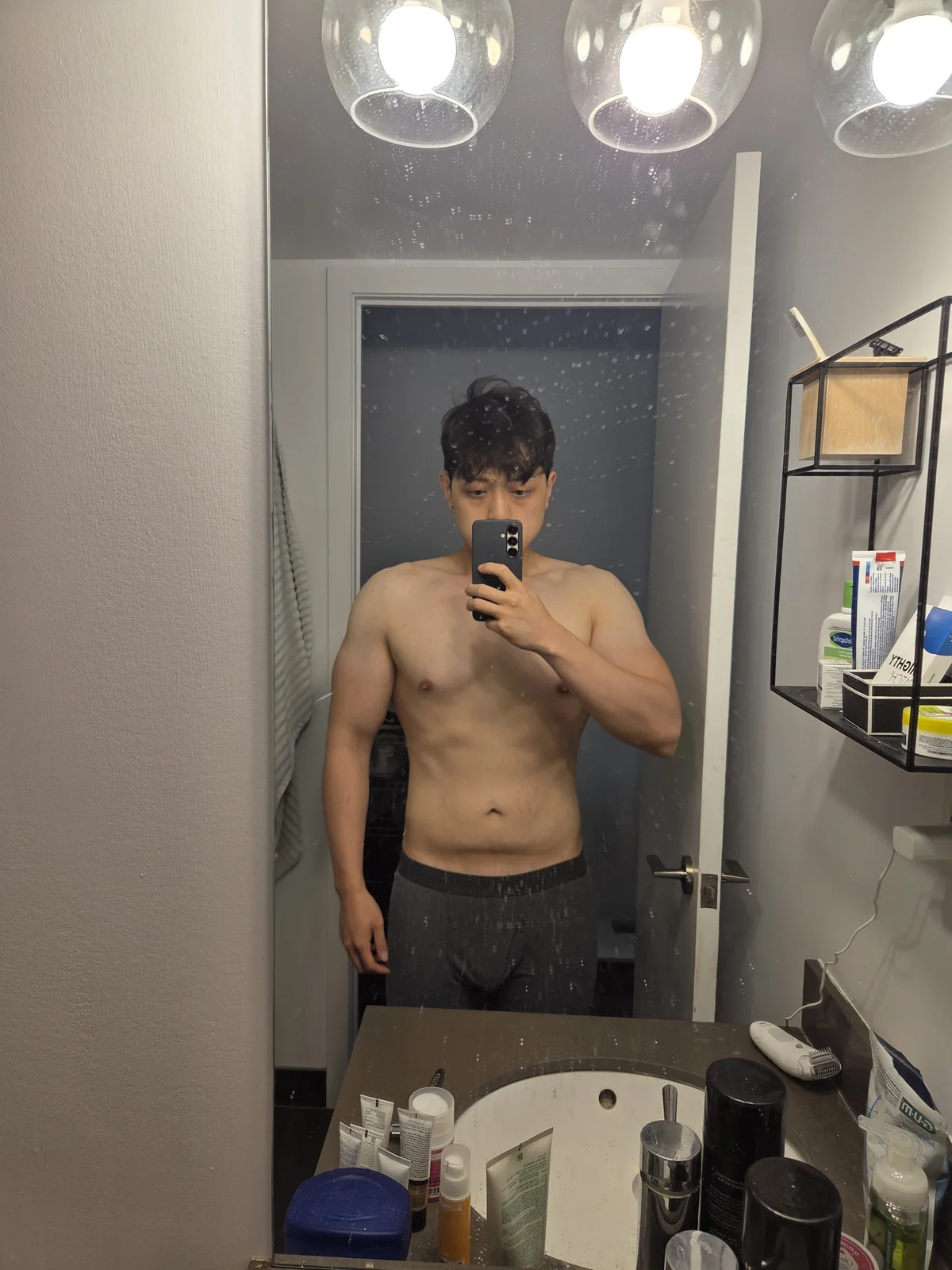
Why does my body look different from different angles? Front view rewards bad lighting; back view tells the truth most of the time. I spent eight months watching the front of my body in a mirror and thinking nothing was happening.
Then my brother took a photo of me from behind at a wedding.
It was a different body.
Why does my body look different from different angles?
Because most people only ever check the front view. The back can change weeks before the front catches up. Different bodies carry fat differently, and the front view often holds the stubborn lower-belly buffer the longest. The back loses shape first for many people, and the front mirror cannot answer that question.
The Front Mirror Lies
The front mirror is the one you see every morning. It is the one in the bathroom, the one in the hallway, the one in every shop fitting room. You see your face. You see your chest. You see your abdomen.
You never see your back. You never see the slope from your hip to your ribs. You never see how your shoulders sit.
So you spent weeks looking at the same mirror and kept asking the same question. Am I smaller?
The mirror you were looking at could not answer that question.
What The Back View Shows
The back view shows things the front never will.
- The dip between your shoulder blades.
- The slope from your waist out to your hip.
- Whether your lats have any shape.
- How your glute sits versus how your thigh sits.
- Where fat loss is starting, or not starting.
Most people carry fat differently on the front and the back. For many people — and often for women or East Asian builds — the back can change first. Shoulders sharpen. The line from ribcage to waist starts to show. The bra line loosens. The glute lifts slightly as the surrounding fat thins. None of this is visible in the front mirror.
What I Did
I started taking one photo from behind every two weeks. Same spot. Same shirt, or no shirt. Same lighting. No posing.
I did not look at them one by one. I looked at them in groups of four.
The four-photo comparison is where the real story is.
I noticed the back was the first thing that changed. My waistline showed up from behind before it showed up from the front. The shoulders got a line. The posture straightened, which made the whole silhouette look different.
The front mirror was still reporting nothing-happening for another six weeks.
Why The Back May Change First
Different bodies carry fat differently. For many people the visceral fat and lower-belly fat are stubborn, so the front reports last. The back often has less of that buffer. Small changes can show up faster there.
The part I am more certain about is the measurement error. If you only ever look at yourself from one angle, you will miss every change that does not happen at that angle.
The Practical Version
Take one photo from behind every two weeks. Same spot. Same lighting. Same clothing or lack of it. Save them in a hidden folder. Look at them in groups of four.
Do not look at them daily. Do not look at them if you are in a bad mood. Do not compare yourself to anyone else from behind.
Just give the back mirror a turn.
Frequently Asked Questions
Why doesn't the front mirror catch progress?+
Because it shows the same view every morning, and that view is often the slowest one to change. The front holds the deepest fat for many people. The mirror you see most is also the one with the least new information to give you.
What changes show up in the back view first?+
The dip between the shoulder blades. The slope from waist to hip. Whether the lats have any shape. How the glute sits relative to the thigh. Where fat loss is starting. The bra line loosening. None of that is visible in a front mirror.
How often should I take a back-angle photo?+
Every two weeks. Same spot, same lighting, same shirt or no shirt. Save them in a folder and look at them in groups of four. Daily back photos are noise. Two-week comparisons start to show the actual story the front mirror is missing.
Why does lighting and angle change the verdict so much?+
Because a body in the same condition can be photographed thinner or heavier depending on the camera height, the light direction, and posture. Lifting the camera a few centimeters changes the entire silhouette. Holding posture for the photo, or not, changes the waist by 1 to 2 cm.
What if the back changed but I still feel the same about my body?+
That is normal. The head adapts slower than the body. Even after weeks of visible change, the internal image is calibrated against the older version. The fix is not more checking. The fix is letting weeks of dated proof slowly outvote the daily mirror.
Next step
Give the back mirror a turn.
If you only look at yourself from one angle, you miss every change that does not happen at that angle. Take one photo from behind every two weeks. Look at them in groups of four.
Try the free body scan