
If Your Diet Broke Your Sleep, It Is Not Discipline Anymore
Why can't I sleep on a calorie deficit, even when I'm exhausted? Usually because the deficit is bigger than the body wants to admit. If dieting and training hard left you exhausted but unable to sleep, the answer is probably not to become even stricter. Sometimes the plan is not impressive. It is just under-fueling a body asked to do too much.
 By pkang6 min read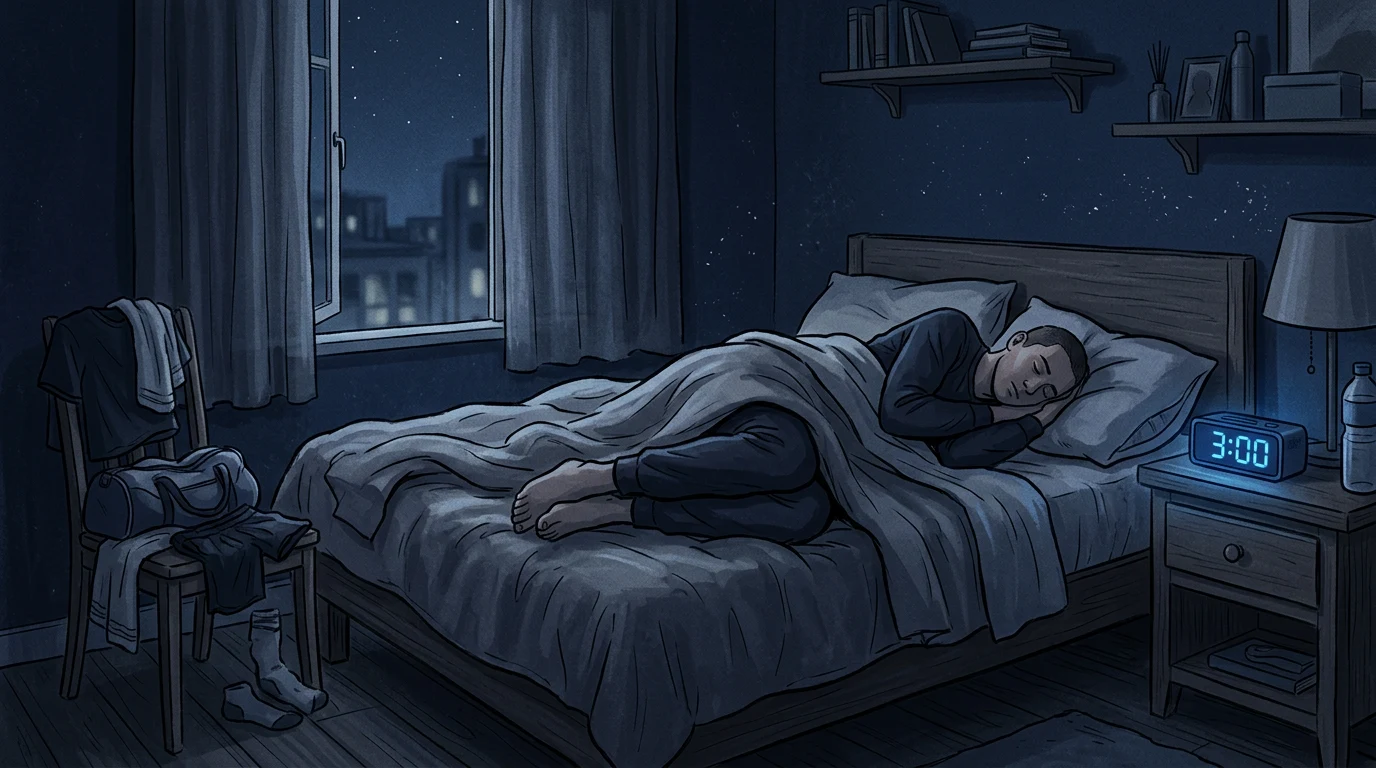
Why can't I sleep on a calorie deficit, even when I'm exhausted? Usually because the deficit is bigger than the body wants to admit. You went to bed tired. Not cute tired. Not “I crushed my workout” tired. The ugly kind.
Heavy eyes. No energy. The whole body asking for a refund.
Then 4:00 a.m. shows up and you are wide awake for no respectable reason.
Now you are lying there doing exhausted math: I am eating clean. I am training hard. I am doing everything right. So why does my body feel like it is filing a complaint?
Why can't I sleep on a calorie deficit?
Usually because the deficit is bigger than the body wants to admit, especially if training is also high. Hard sessions plus aggressive food cuts plus poor sleep is not discipline. It is a low-grade emergency. Severe fatigue stacked with insomnia means the plan is under-fueling a body asked to do too much.
Diet Culture Loves Flattering Breakdown
No appetite? Wow, so disciplined. Cannot sleep? Must be the grind. Running on fumes? At least you are serious.
No. Sometimes the plan is not impressive. Sometimes it is under-fueling a body that is being asked to do too much.
If Your Output Went Up, Your Support Needs Probably Did Too
If you are lifting several times a week, layering in cardio, and generally trying to be good, your body is using fuel.
If the plan keeps stripping food down while training volume stays high, the body does not always thank you with better results. Sometimes it gets noisier. Sometimes it gets more fragile. Sometimes sleep is one of the first things that starts acting strange.
That does not mean every case of insomnia is caused by dieting. It does mean severe fatigue plus aggressive dieting plus a lot of training is not something to romanticize.
A Plan Can Look Clean on Paper and Still Be Wrong for the Body Doing It
This happens all the time.
The meals look disciplined. The portions look controlled. The workouts look admirable. And the person is miserable.
They are freezing. They are waking up too early. They are dragging themselves through the day.
But because the plan photographs well, they assume the body is the problem. Or did the plan quietly turn into a low-grade emergency?
“Not Hungry” Is Not the Same Thing as “Well Fueled”
People love this because it sounds efficient: my appetite is down, so the diet must be working.
Not always.
Appetite can get weird when the system is pushed too hard. Feeling less hungry does not automatically mean the body is happy.
And if performance is high, fatigue is high, and sleep is getting wrecked, you do not get to call that success just because the food looks virtuous.
What to Do Instead
- Stop calling obvious distress commitment.
- Look at the full setup: food, carbs, training load, energy, sleep, and stress.
- Do not ignore persistent insomnia.
- Make the plan more livable before you make it more extreme.
When the plan is making you feel wrecked, vague self-blame is useless. You need a clearer read on the pattern.
Closing
Track the behavior. Track the signals. Do not let “I am trying hard” become the only evidence you trust.
Because if your diet broke your sleep, the answer is probably not to try even harder.
Frequently Asked Questions
Is insomnia a normal part of dieting?+
Mild restless nights happen for many people in the first weeks. Persistent 4 a.m. wake-ups, severe fatigue, and a body that feels fragile are not normal. They are signs the plan and the training load are out of balance. Persistent insomnia deserves real attention.
Why does 'not hungry' not equal 'well-fueled'?+
Appetite gets weird when the system is pushed too hard. Feeling less hungry can mean the body has stopped expecting fuel, not that it has enough. If performance is dropping, sleep is wrecked, and energy is low, low appetite is not proof of success.
Should I add more calories or train less?+
Usually both, but eating slightly more is the cheaper move first. A small bump in carbs or total calories often restores sleep within a week. If insomnia continues despite that, training volume needs to come down too. Make the plan more livable before making it more extreme.
Why do clean-looking diets still wreck the person doing them?+
A plan can photograph well and still under-fuel the body running it. Disciplined-looking meals and admirable workouts mean nothing if the person is freezing, waking at 4 a.m., and dragging through the day. The plan was never meant to produce a low-grade emergency.
When should I see a doctor?+
When sleep stays broken for more than two to three weeks despite eating more, training less, and stabilizing the basics. Persistent insomnia, racing heart, severe mood changes, or lasting fatigue are not diet badges. They are reasons to get a real medical opinion.
Next step
Do not romanticize a plan that is breaking signals.
If your body is filing complaints, step back and get a clearer read on the pattern instead of answering distress with more discipline theater.
Try the free body scan