
Pillar
Training While Dieting
Adding cardio, losing sleep, lifting weaker, feeling harder to recover — the full reader on what training really does during a cut and why "more exercise" usually is not the fix.
8 articles in this topic.

More Training Volume Is Not a Fix When Recovery Is Already Failing
Extra sets feel productive long before they prove useful. When recovery is already thin, more volume raises the bill faster than the body can pay it.

Why Adding Cardio to a Cut Can Backfire Faster Than You Think
Why adding cardio to a cut can backfire is rarely about the cardio. It's usually about what the cardio costs everywhere else. Cardio looks like the obvious add when fat loss slows. It often makes things worse, not better. The reasons are physiological, behavioral, and almost never about the cardio itself.

Why Your Strength Increases Before Your Shape Changes
Your strength improves before your shape does. The first six weeks of lifting are mostly neural. This is what that looks like from the inside.

Why Your Workouts Feel Harder When You Are Dieting
Training under a deficit is not the same workout at a different weight. Your perception of difficulty is mostly correct, and there is a simple reason.

Sleep Debt Ruins a Week of Dieting in Three Nights
Three bad nights is enough to undo a week of careful eating. Sleep is not a recovery topic. It is a dieting topic.

When the Workout Becomes Therapy, Not Punishment
Most people train to make up for something. The workouts that change you are the ones that stopped being repayment.
Exercise Is Not Shrinking You the Way You Expected
If you are working out consistently and still not shrinking, the problem probably is not the workout. It is what the workout is actually doing.
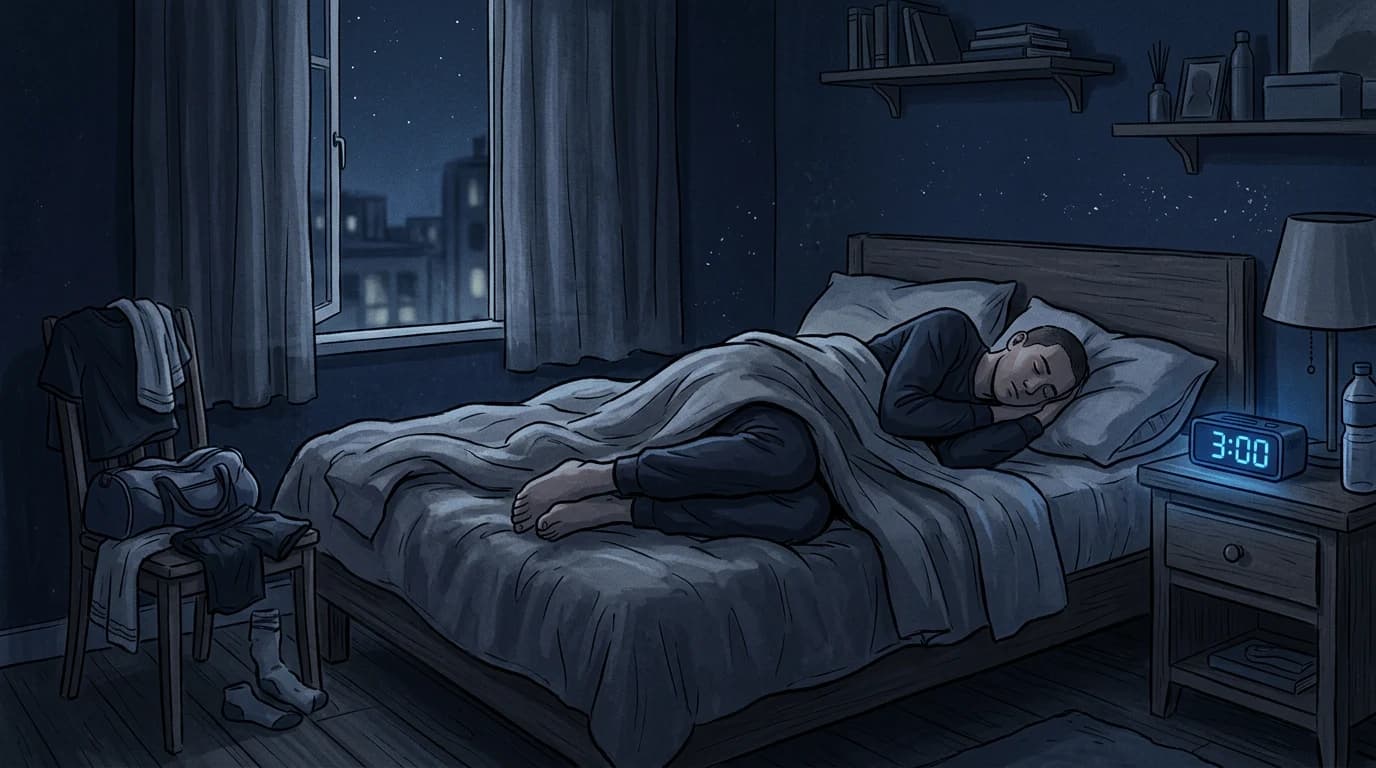
If Your Diet Broke Your Sleep, It Is Not Discipline Anymore
If dieting and training hard left you exhausted but unable to sleep, the plan may be under-fueling you. Persistent insomnia deserves real attention, not more self-blame.
FAQ
Common questions on training while dieting
Direct answers pulled from the most-read posts in this topic.
Why am I working out but not losing weight?
Because exercise is not a shrinking machine. A full hour of cardio burns 300 to 500 calories, which most people eat back without noticing. Training also raises appetite and retains water in recovering tissue. The workout builds the engine. The plate decides what the engine runs on. The scale catches up last.
How do I stop using exercise as punishment?
Change what the workout is paying for. Punishment-training closes the loop between effort and food, which makes rest days feel like unpaid debt. Stop weighing yourself right after sessions. Train on a fixed cadence, not a guilt cadence. The same workout shifts when it stops being a receipt for what you ate.
Does bad sleep ruin weight loss?
Yes, faster than people realize. Three nights of under-sleeping push hunger signals up, cravings up, and decision-making around food down. The crack often shows up two to three days later as a binge people misread as willpower failure. Look at sleep before willpower. No amount of meal prep fixes three bad nights.
Why does strength increase before muscle size?
Because the first six to eight weeks of lifting are mostly neural, not visual. The nervous system learns to recruit muscle you already have. Coordination improves. Stabilizers wake up. The motor pattern cleans up. The numbers move first because the body upgrades the existing tissue before deciding to commit resources to growing new tissue.
Why does adding cardio to a cut often backfire?
Because the body in a deficit answers exercise much louder than a fed body does. NEAT drops. Appetite rises. Fatigue makes the rest of the day sedentary. The 300 calories burned in the session often net 80 by bedtime. A stalled cut is rarely a movement deficit. Cardio is rarely the cheapest tool to fix it.
Next step
Start a free body-fat estimate from one photo.
Reading about weight loss is one thing. Building a weekly record that panic cannot rewrite is another.
Try the free body scanOther topics