Why Does My Hunger Spike at Night When I Was Fine All Day
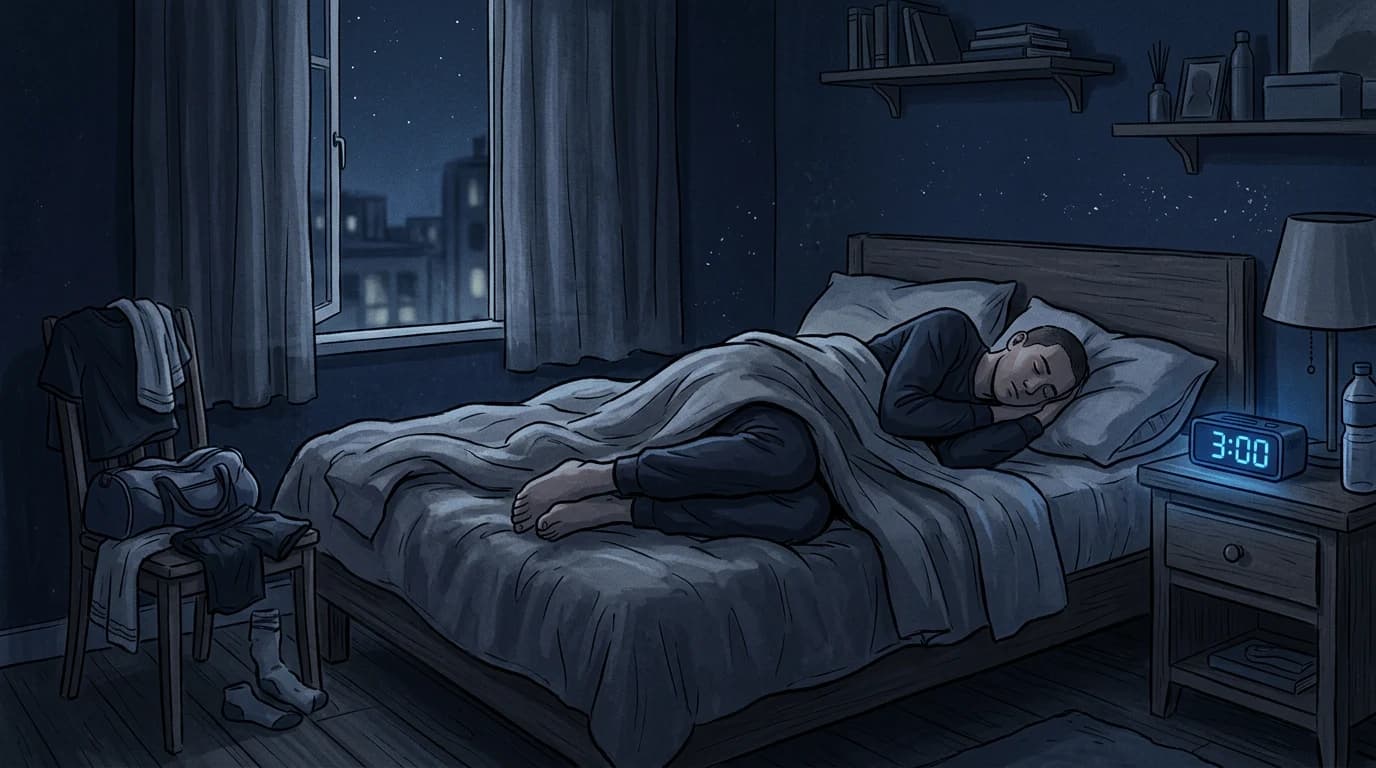
The cleanest day on paper can end at 9 p.m. with you standing at the open fridge. You ate well. You hit your protein. You walked. The day was a good day. And then the evening arrived and tried to undo it.
 By pkang8 min read
Why am I hungry at night but not during the day, even on a clean food day? The evening is where the day's restriction comes due. The cleanest day on paper can end at 9 p.m. with you standing at the open fridge.
You ate well. You hit your protein. You drank water. You walked. The day, on every metric you usually grade it on, was a good day.
And then the evening arrived and tried to undo it.
This is one of the most common questions I get, so the answers are organized as a Q&A. The honest version of the answer is not "you have no discipline." The honest version is closer to: the day and the evening are running on different physiology and different psychology, and almost nothing is wrong with you.
Why am I hungry at night but not during the day?
Three things stack in the evening. Caloric debt from the day becomes audible once distractions drop. Decision fatigue lowers self-regulation. And the kitchen is suddenly nearby. Most night spikes are not psychological. They are scheduling problems wearing psychological clothes. A later, protein-forward dinner usually quiets the spike inside two weeks.
Q: what does the Evening Hunger Spike Actually Feel Like?
It is louder than daytime hunger.
It usually arrives between 8 and 10 p.m., often within an hour of finishing your last planned meal. The sensation is more urgent than your afternoon hunger, more specific in what it wants, and less patient with negotiation.
If you ignore it, it does not slowly fade the way daytime hunger does. It tends to escalate, then plateau, then escalate again, until you either eat or fall asleep.
Most people I talk to describe it the same way. The day was easy. The night was a fight.
Q: what Did the Night Spike Look Like for Me?
For most of my first cut, it looked like the same scene three to four nights a week.
I would get through the day on a clean, planned set of meals. The total was where I wanted it. The protein was where I wanted it. The afternoon went without incident.
Around 8:45 p.m., I would feel it start. A vague pull toward the kitchen. Not specific yet. Within twenty minutes, the pull became specific — usually toward something crunchy and salty. By 9:30 p.m., I had either eaten 400 calories I had not planned, or spent 40 minutes white-knuckling on the couch with the TV up.
The day was a number. The evening was a person.
The day-version of me had been logging clean meals. The evening-version was a tired adult after a 10-hour workday looking for a small reward. Calling those two the same person was one of the things that was making the evenings harder.
Q: why is the Evening Signal Louder than the Daytime Signal?
Three things stack on top of each other in the evening, and any one of them alone would already make hunger noisier.
Caloric debt. By 9 p.m., your daily intake is mostly behind you. If you have been in a deficit, the body has been mildly under-fueled all day. Most days, that under-fueling sits quiet. By the evening, when the day's other distractions drop away, the under-fueling becomes audible.
Decision fatigue. You have been making decisions all day. Late evening is when self-regulation runs lowest. The brain reaches for fast pleasure, and food is one of the fastest available.
Lower blood sugar in the evening, especially after a light or long-ago dinner, gets misread by the brain as a hunger signal. The actual deficit is small, but the signal is loud.
You are also home. The kitchen is two rooms away. There is no work, no traffic, no meeting blocking the path. The friction between feeling the urge and acting on it is the lowest it has been all day.
None of those is a failure of character. The evening just stacks the deck against you.
Q: how do i Tell Whether the Spike is Real Hunger or a Behavior Loop?
Two questions usually settle it.
First: would I be hungry for a chicken-and-rice plate right now? If yes, the body is genuinely under-fueled. The dinner was not enough. The fix is at the dinner level, not the discipline level.
Second: am I reaching for the same specific food at roughly the same time three or more nights a week? If yes, that is not hunger. That is a pattern. Your evening has organized itself around a small reward, and your stomach is along for the ride.
A real hunger spike resolves with a real meal. A pattern spike resolves with a slightly different evening structure.
Q: what Worked for Me, in Plain Terms?
Two changes did most of the work.
I moved my dinner later, by about 90 minutes. The 8:45 spike still came, but now my dinner had landed at 8 p.m. instead of 6:30 p.m. There was less unfueled time between the last meal and the spike. The spike got quieter inside two weeks.
I added a planned evening item. A small protein-forward snack — usually 150 to 200 calories of yogurt, fruit, or a protein shake — slotted at 9:30 p.m. into my daily plan. Not as a treat. As a meal. Knowing it was coming changed the texture of the evening. The spike stopped feeling like a fight because the meal was already on the schedule.
The combined change was about 200 calories moved from earlier in the day into the evening, with no change to the daily total. Same deficit. Different distribution. Calmer nights.
Most evening spikes get treated as a willpower problem. Most of them are a meal-timing problem.
Q: why does Protein at Dinner Help More than Carbs?
Protein has the strongest satiety signal per calorie of the three macronutrients.
A dinner that is protein-forward — say, 35 to 45 grams of protein — usually keeps the evening hunger signal quieter for longer than a same-calorie dinner that is carb-forward.
This is not because carbs are villains. It is because the satiety effect of protein lasts longer through the post-dinner window where most spikes occur.
If your dinner is light on protein and you find yourself raiding the kitchen at 9 p.m., try the same dinner with a protein bump first before assuming the spike is psychological.
Q: is Sleep Involved?
Yes, and it is the variable people forget.
Sleep-deprived bodies are hungrier the next day, and especially in the evening. If you have been sleeping six hours instead of seven for a few nights, the evening spike will be louder than the same week with adequate sleep.
The fix is not glamorous. Push bedtime back toward your real sleep need. Two extra hours of sleep across a week often reduces evening cravings more than any food change.
This is the cheapest and least-used appetite intervention in dieting. Most people would rather try a new meal plan than go to bed at 11:30 instead of 12:30.
Q: what if i Tried all this and the Spike is still Happening?
Then your day is probably under-fueling itself.
If the dinner is on time, the protein is high, sleep is decent, and the spike is still arriving like clockwork at 9 p.m., the issue is usually that the daily total is too low for your activity.
A consistent loud evening signal across multiple weeks, despite a structurally fine evening, usually means the deficit is too aggressive. The fix is not more discipline. The fix is a slightly larger daily total — even by 150 to 200 calories — until the spike loses its edge.
Diets that fail in the evenings are usually diets that were too tight at lunch.
The Line Worth Keeping
The day was a number. The evening was a person.
If you keep solving the day and ignoring the evening, the evening keeps undoing the day.
The fix is rarely more willpower. The fix is usually a slightly later dinner, a slightly higher protein floor, a planned evening item that stops the spike from being a surprise, and an honest look at how much sleep the past week actually gave you.
Most night-hunger spikes are not psychological. They are scheduling problems wearing psychological clothes.
Frequently Asked Questions
Why does my hunger hit hardest around 9pm?+
By 9pm, the day's intake is mostly behind you and any deficit becomes audible. Self-regulation also runs lowest in late evening, and the kitchen is two rooms away with no work or meetings in the way. The friction is the lowest it has been all day.
Will eating dinner later actually help?+
For most people with evening spikes, yes. Pushing dinner 60 to 90 minutes later shrinks the unfueled gap between dinner and the spike. The same total calories, just redistributed. Two weeks is usually enough to see whether the change quiets the evening.
Should I plan an evening snack?+
If the spike happens at the same time most nights, yes. A planned 150 to 200 calorie protein-forward snack — yogurt, fruit, a small shake — slotted into the daily plan removes the surprise. The spike stops feeling like a fight because the meal is already on the schedule.
How does sleep affect night cravings?+
Sleep-deprived bodies are hungrier the next day, especially in the evening. Three nights of six hours instead of seven and a half routinely produces 200 to 400 calories of extra hunger. Pushing bedtime back is one of the cheapest appetite interventions available.
What if I tried all this and still spike at night?+
Then your daily total is probably too low for your activity. A consistent loud evening signal across several weeks, despite a structurally fine evening, usually means the deficit is too aggressive. Add 150 to 200 calories until the spike loses its edge.
Next step
Move calories into the evening, not out of the day.
Most night spikes get treated as a willpower problem. Most of them are a meal-timing problem. A later dinner, a higher protein floor, and a planned evening item usually quiet the spike inside two weeks.
Try the free body scan